Cloud computing has transformed how businesses build, scale, and innovate. From startups launching new products to enterprises running mission-critical applications, the cloud has become the foundation of modern digital operations.
But there’s a catch.
As organizations embrace AI, multi-cloud environments, Kubernetes, and data-intensive applications, cloud costs are rising faster than ever. What was once viewed as a flexible and cost-effective solution is now one of the largest operational expenses for many businesses.
This is where FinOps comes in.
In 2026, FinOps is no longer just a cost-management practice. It has evolved into a strategic framework that helps organizations maximize the value of every technology investment while maintaining performance, reliability, and scalability. Industry reports show that FinOps is expanding beyond cloud spending to include AI, SaaS platforms, licensing, and overall technology value management.
At Futentia Solutions, we help businesses create smarter cloud strategies that balance innovation with financial accountability.
What Is FinOps?
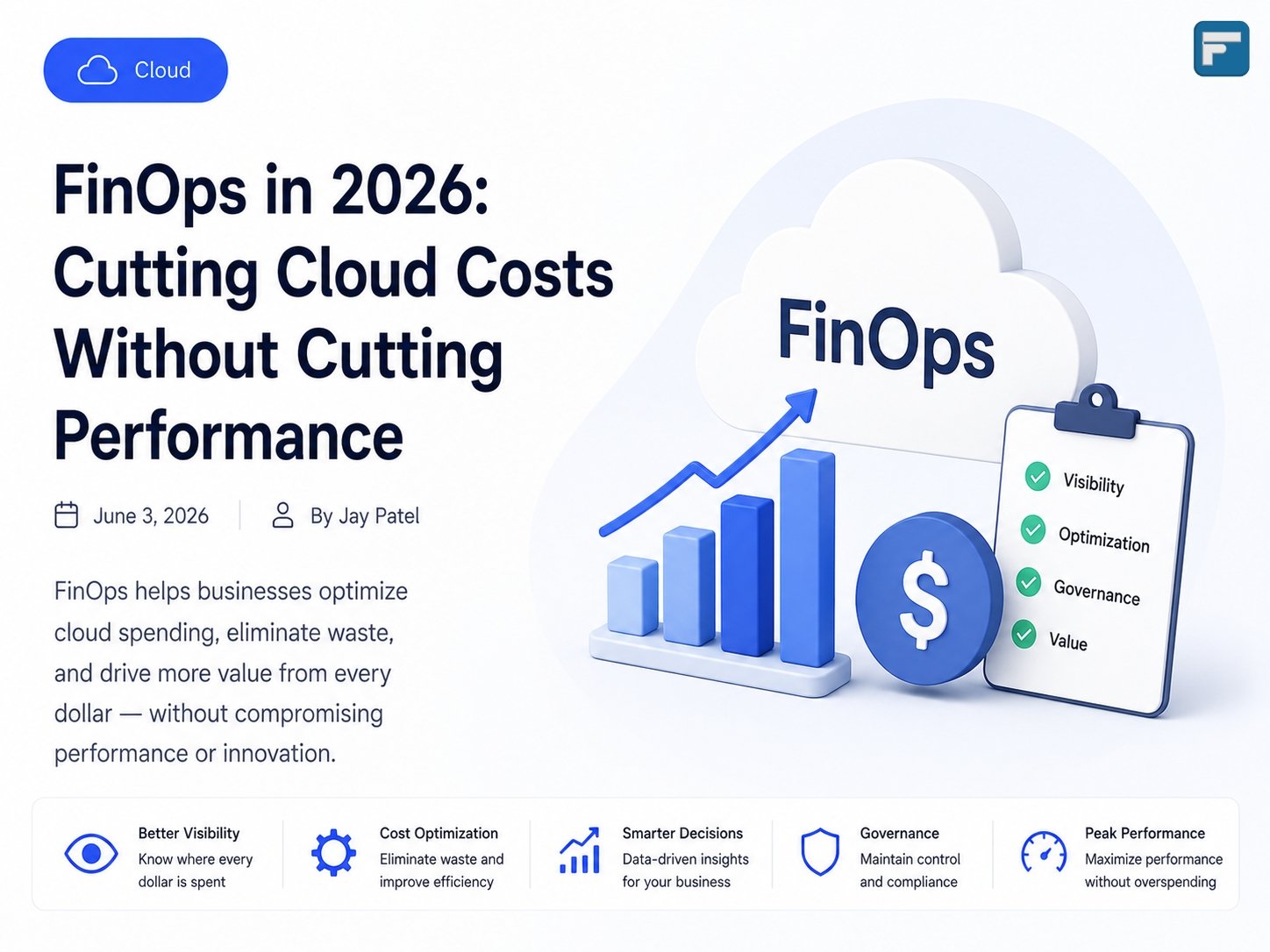
FinOps (Financial Operations) is a collaborative practice that brings together engineering, finance, operations, and business teams to manage cloud spending effectively.
Rather than looking at cloud bills at the end of the month, FinOps encourages real-time visibility and data-driven decision-making.
The primary goal isn’t simply to reduce costs.
The goal is to ensure that every dollar spent on cloud technology delivers measurable business value.
A successful FinOps strategy helps organizations answer questions such as:
- Where is our cloud budget being spent?
- Which teams own specific costs?
- Are resources being utilized efficiently?
- Can we optimize workloads without affecting performance?
- How can we forecast future cloud expenses?
Why FinOps Matters More Than Ever in 2026
AI Is Changing Cloud Economics
The rapid adoption of AI has introduced a new layer of complexity to cloud spending.
GPU infrastructure, AI model training, inference workloads, and AI-powered applications can significantly increase monthly cloud costs. Many organizations are struggling to track and control these expenses while still delivering innovation. FinOps experts now consider AI cost management one of the highest priorities for modern organizations.
Without proper governance, AI projects can quickly exceed budgets and reduce ROI.
Multi-Cloud Environments Are Growing
Today’s businesses rarely rely on a single cloud provider.
Organizations commonly use multiple cloud platforms to improve resilience, flexibility, and compliance. While this approach offers many advantages, it also creates challenges around visibility and cost management.
Different billing models, pricing structures, and resource allocation methods can make financial tracking difficult. Modern FinOps practices help organizations maintain control across increasingly complex cloud ecosystems.
Cloud Waste Still Exists
Despite advances in cloud management tools, unnecessary spending remains a common issue.
Typical sources of cloud waste include:
- Idle virtual machines
- Over-provisioned resources
- Unused storage
- Forgotten development environments
- Excessive data transfer charges
Research continues to show that cloud waste remains a significant concern, especially as AI adoption accelerates infrastructure consumption.
Common Causes of Rising Cloud Costs
Before optimization can begin, organizations need to understand what drives unnecessary spending.
Over-Provisioning
Many applications run on a larger infrastructure than they actually need.
Teams often allocate extra resources “just in case,” resulting in higher monthly bills.
Lack of Visibility
Without proper tagging and reporting, organizations struggle to identify which teams or workloads are responsible for cloud spending.
Inefficient Storage Management
Old backups, unused databases, and duplicate storage resources can quietly increase costs over time.
Uncontrolled AI Usage
As AI tools become more accessible, teams may deploy models and workloads without understanding their long-term financial impact. Recent industry analysis suggests AI spending is becoming one of the fastest-growing technology expenses.
5 FinOps Strategies Every Organization Should Adopt
1. Improve Cost Visibility
Visibility is the foundation of FinOps.
Organizations should implement:
- Resource tagging
- Cost allocation reporting
- Team-based dashboards
- Real-time monitoring
When teams understand where money is being spent, optimization becomes much easier.
2. Automate Cost Optimization
Manual cloud management is no longer sustainable.
Automation can help:
- Shut down idle resources
- Resize underutilized infrastructure
- Detect spending anomalies
- Optimize scheduling for non-production environments
AI-powered FinOps tools are increasingly helping organizations identify savings opportunities automatically.
3. Shift Cost Awareness Left
Modern organizations are integrating FinOps directly into development workflows.
Instead of reviewing costs after deployment, teams evaluate financial impact during planning, development, and testing phases.
This proactive approach helps prevent expensive mistakes before they reach production.
4. Monitor AI Infrastructure Carefully
AI workloads often consume resources differently from traditional applications.
Organizations should establish governance around:
- GPU allocation
- Model usage
- Experiment tracking
- AI budget controls
This ensures innovation remains financially sustainable.
5. Focus on Business Value, Not Just Cost Reduction
Reducing cloud spending is important, but reducing value is not.
Leading organizations track metrics such as:
- Cost per customer
- Cost per transaction
- Cost per API request
- Cost per workload
This helps connect technology investments directly to business outcomes. FinOps leaders increasingly emphasize value creation rather than simple cost-cutting.
Benefits of FinOps
Organizations that adopt FinOps effectively can achieve several advantages:
Better Financial Visibility
Clear insights into cloud spending improve decision-making across departments.
Reduced Waste
Unused and underutilized resources can be identified and optimized quickly.
Improved Forecasting
Finance teams gain greater confidence in future budgeting and planning.
Faster Innovation
Teams can experiment with new technologies while maintaining financial accountability.
Stronger Collaboration
FinOps creates alignment between finance, engineering, and business leadership.
The Future of FinOps
The future of FinOps extends far beyond cloud cost management.
According to industry research, FinOps is evolving into a broader discipline focused on managing the value of technology investments, including AI platforms, SaaS applications, licensing, and hybrid infrastructure.
Some emerging trends include:
- AI-powered cost optimization
- Predictive cloud budgeting
- Real-time spending intelligence
- Automated governance policies
- Sustainability-focused cloud strategies
Organizations that embrace these trends will be better positioned to scale efficiently while maintaining financial control.
How Futentia Solutions Helps
At Futentia Solutions, we help organizations build modern FinOps capabilities that align technology investments with business objectives.
Our cloud optimization services include:
- Cloud Cost Assessments
- Multi-Cloud Governance
- Kubernetes Cost Optimization
- AI Infrastructure Cost Management
- FinOps Strategy Consulting
- Cloud Monitoring & Automation
Our goal is simple: help businesses maximize performance, accelerate innovation, and optimize every technology investment.
Conclusion
Cloud spending is no longer just an IT concern – it is a business priority.
As AI adoption accelerates and cloud environments become more complex, organizations need greater visibility, accountability, and control over technology investments.
FinOps provides the framework to achieve that balance.
The organizations that succeed in 2026 won’t necessarily be the ones spending the least on cloud. They’ll be the ones generating the most value from every dollar invested.
At Futentia Solutions, we help businesses transform cloud spending from a cost center into a strategic advantage.